
Mavis Batey MBE
A code-breaker on the Enigma team at Bletchley Park during WWII, Mavis Batey subsequently became a prolific author and an ardent campaigner for the preservation of historic landscapes and gardens in post-war Britain. She played a key role in bringing about the Register of Parks and Gardens of Special Historic Interest. As a result of her insightful and illuminating report the Mount Edgcumbe parkland was designated a Grade I listed landscape in June 1987.
Mavis Lilian Batey (née Lever) (1921-2013), daughter to a postal worker and seamstress, had revealed a talent for languages during her convent school education in Croydon, UK. In 1938 she registered for a degree course in German with French at University College London. Her university days saw her take part in protests at the German embassy after Krisstallnacht in November 1938 and in student movements supporting a Republican Spain. A student placement at the University of Zurich was cut short as war threatened and Mavis returned to England, gave up her studies and applied to join the Foreign Office.
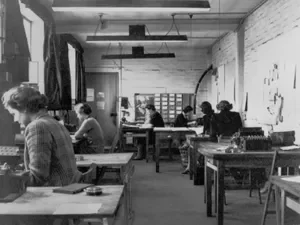
A spell breaking commercial codes demonstrated Mavis’ talents for code-breaking and she was sent to the newly established Bletchley Park to join the Enigma research team led by Dilly Knox, where she excelled. Commenting on the work of Mavis Lever, and her colleague Margaret Rock, Knox said “Give me a Lever and a Rock and I can move the universe”.
Mavis met her future husband Keith Batey at Bletchley. The post-war years brought 3 children and a spell in Canada before a return to the UK in 1955. Mavis’ interest in landscape history took hold during the years she devoted herself to bringing up their children. She was particularly inspired by the idea of being able to read the English landscape for its human history. In the words of her long-time writing partner, David Lambert, she brought “her Bletchley skills for understanding a coded language to bear on the English landscape garden” (Lambert 2017).
Research on the historic designed landscape at Nuneham Park near Oxford became Mavis’s launchpad into a life devoted to teaching landscape and garden history and to conservation campaigns. She became Honorary Secretary of the Garden History Society in 1972 and under her tutelage the Society moved from simply being a learned society to become a campaigning conservation body. Energetic work to combat insensitive developments followed, and she was instrumental in rescuing, among other places, the neglected 18th century landscape at Painshill in Surrey.
It was in no small part thanks to Mavis Batey that the recognition and protection of historic landscapes was brought onto a formal footing. After many years of campaigning, a national Register of Parks and Gardens of Special Historic Interest was eventually established. The Garden History Society (now the Gardens Trust) was tasked with suggesting gardens and parks for inclusion on the register.
Mount Edgcumbe was very much on Mavis Batey’s radar. A team of young researchers were dispatched to collect information on Mount Edgcumbe. Their findings provided the basis for a thoughtful and detailed report on the Mount Edgcumbe parkland by Mavis Batey. It was this report that led to the parkland at Mt Edgcumbe being designated a Grade I listed landscape in 1987.
Image © Royal United Services Institute, where Mavis Batey gave an address in December 2011
In the introductory pages of her report, where she dwells of Mount Edgcumbe’s magnificent position by the sea, Batey writes that ‘by means of art a whole variety of landscape images were produced’. She quotes Fanny Burney:
"The sea, in some places, shows itself in its whole vast and unlimited expanse; at others, the jutting land renders it merely a beautiful basin or canal - a desert island one moment and a luxuriant country the next".
Mavis Batey subsequently presented the report to the Joint Committee of councillors from the Park’s owners, Cornwall and Plymouth City Councils. A record of the occasion shows that the Committee members were very impressed with the report and followed up its presentation with detailed plans for how best to implement Mrs Batey’s recommendations. Sadly, the impetus petered out as other priorities jostled for attention and little or no action was ever taken.
Mavis Batey’s fine report on Mount Edgcumbe now only survives as a poor-quality photocopy but MERIT is delighted to have secured the agreement of the Gardens Trust to reproduce the report and we look forward to making this available in the course of 2026.
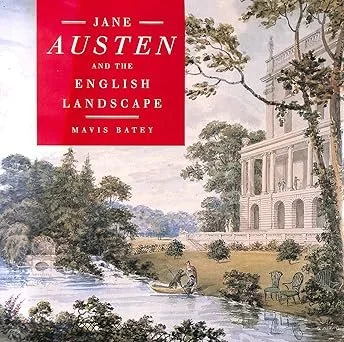
Mavis Batey was the author of many books and articles. The eighteenth and early nineteenth century were a particular interest of Mavis Batey, writes co-author David Lambert, especially the relationship between landscape and literature. Her books include:
Oxford Gardens: The University's Influence on Garden History (1982)
The English Garden Tour (1990, with David Lambert)
Arcadian Thames (1994, with H Buttery, D Lambert, and K Wilkie)
Regency Gardens (1995)
Jane Austen and the English Landscape (1996)
Alexander Pope: the Poet and the Landscape (1999)
The Royal Horticultural Society awarded Mavis Batey the Veitch Memorial Medal in 1986 for her role in preserving gardens that might otherwise have been lost. An MBE (Member of the Order of the British Empire) followed the following year for ‘services to the preservation and conservation of historic gardens’.
Sources:
David Lambert, The Oxford Dictionary of National Biography entry for "Batey [née Lever], Mavis Lilian (1921–2013), code-breaker and garden historian", published online on 1 January 2017
Sarah Jackson, Mavis Batey: From codebreaker to campaigner for historic park and gardens!, personal interview, https://www.parksandgardens.org/knowledge/contemporary-profiles/mavis-batey